

You are sitting at the table. The atmosphere is buzzing. You look down at your cards and see two Kings staring back at you. A hard 20. It is the second-strongest hand in the game, only beaten by a Blackjack or a 21.
Then, you look at the dealer. They are showing a 6—a classic bust card.
The temptation starts to creep in. You think, If I split these Kings, I could turn this one winning hand into two winning hands. I could double my profit in seconds. It feels like an aggressive, power move. It feels like a gamble worth taking.
But is it?
The vast majority of blackjack strategy guides, mathematicians, and professional players will scream a resounding “No!” at you. Breaking a winning hand to chase a bigger payout is widely considered one of the cardinal sins of the casino floor. However, blackjack is a game of nuance, history, and mathematics. While the general rule is to never split 10s, understanding why—and knowing the incredibly rare exceptions where you might actually consider it—can elevate your game from a novice level to a strategic mastermind.
Understanding the Mechanics of the Split
Before diving into the strategy, let’s clarify what we are talking about. In blackjack, a “10” value card isn’t just the number 10. It includes Jacks, Queens, and Kings.
If you are dealt a pair of these cards (for example, a Jack and a King), you have the option to “split.” This requires placing a second bet equal to your original wager. The dealer separates your cards, and you play them as two distinct hands. You receive a new card for the first 10, play that hand out, and then repeat the process for the second.
The allure is obvious. You start two separate hands with a strong base value of 10. Statistically, 10 is a great starting point. But does it outweigh the value of a guaranteed 20?
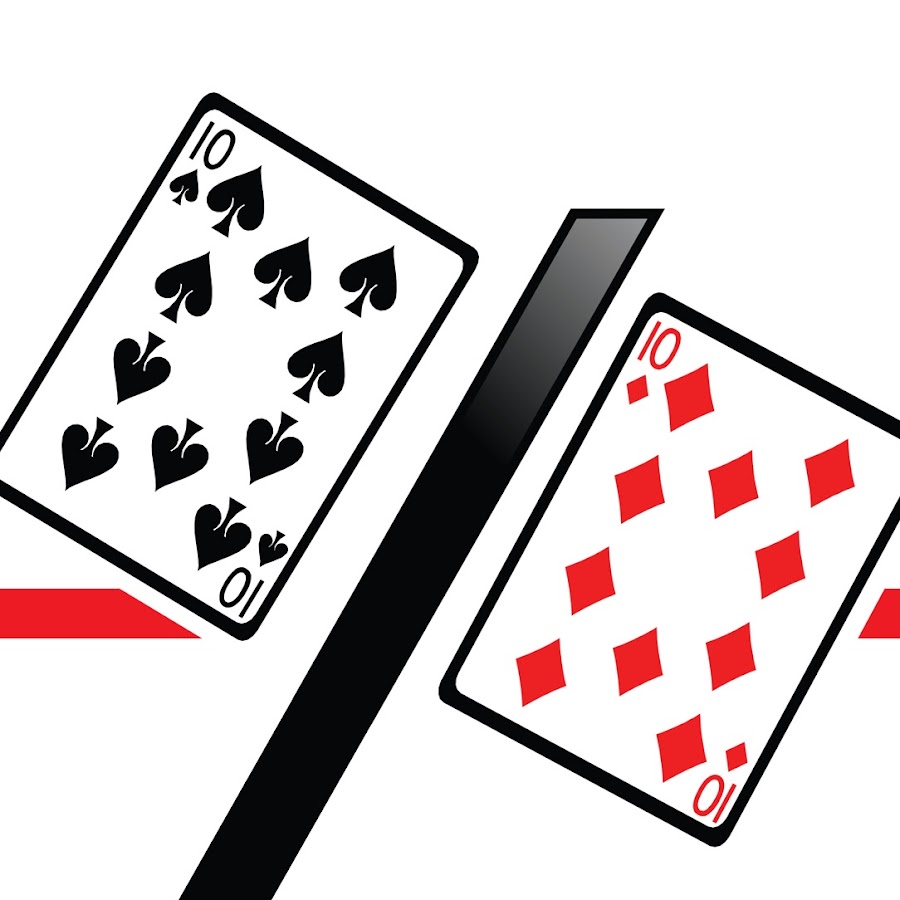
The History of the Controversy
Interestingly, the “never split 10s” rule wasn’t always gospel. If we look back at the history of blackjack literature, early theorists had different ideas.
In 1949, John Scrane wrote Scrane on Cards. In his analysis, he argued that players should split 10s if the dealer is showing a 5 or a 6. His logic was based on the probability of the dealer busting.
Later, in 1962, Edward Thorp published Beat the Dealer, a book that revolutionized the game and introduced card counting to the masses. Thorp also suggested that there were scenarios where splitting 10s was mathematically viable against a weak dealer card.
So, why do modern guides disagree with these legends?
The answer lies in computer simulations. In the mid-20th century, calculations were done by hand or with primitive computing power. Today, we can run billions of hand simulations in seconds. These modern simulations consistently show that while splitting 10s against a 6 is profitable, it is less profitable than simply standing on the 20.
In blackjack, you aren’t just trying to win; you are trying to maximize expected value (EV). Since standing on 20 offers a higher EV than playing two hands starting with 10, the “smart” money stays put.
The Mathematics of Standing vs. Splitting
To understand why splitting is generally a mistake, you have to look at the numbers.
When you hold a 20, you have a massive advantage. You will win or push (tie) the vast majority of the time. The dealer has to pull a 20 or 21 to beat you. If they have a 6 showing, they must hit. There is a high chance they will bust, but there is also a chance they will make a hand like 17, 18, or 19. In all those non-bust scenarios, your 20 crushes them.
If you split, you are hoping to draw another 10 or Ace to get back to where you started.
- Scenario A (Standing): You have one hand of 20. You are highly likely to win one unit of money.
- Scenario B (Splitting): You have two hands. You might draw a 5 on one (giving you 15) and a 7 on the other (giving you 17). Suddenly, you have risked double the money to have two mediocre hands that could easily lose to a dealer’s 18.
By splitting, you are trading a dominant position for two uncertain ones. You are engaging in greed rather than strategy.in ones. You are engaging in greed rather than strategy.
The “Flow of the Cards” and Table Etiquette
Beyond the math, there is the social element of the casino. If you are playing online against a computer, you can do whatever you want. But if you are sitting at a live table—either in a physical casino or a live dealer game online—splitting 10s will make you unpopular very quickly.
Many gamblers believe in the superstition of the “flow of the cards.” They believe that the order of the deck is sacred and that bad plays disrupt the sequence.
If you split 10s, take two extra cards, and then the dealer draws a card that makes them a 21 to beat the whole table, the other players will blame you. They will say you “stole the bust card” or “messed up the shoe.”
While this isn’t mathematically true (the cards are random, and your bad play could just as easily help the table as hurt it), the perception is real. Players view splitting 10s as a greedy move made by amateurs. If you want to have a friendly time at the table, sticking to the 20 is the diplomatic choice.
-
Welcome Bonus200% up to 10,000 USDT + 50 FS + 5 USDT Sports Bet * Terms and conditions apply to all offers. Click on “Claim now” to get further details about the respective bonus.+5000 games VIP program Crypto Payments To Claim: Click Join NowCryptoCasino.comJoin Now
-
Welcome Bonus19,000 €/$ + 300 FS * Terms and conditions apply to all offers. Click on “Claim now” to get further details about the respective bonus.+70 Game Companies Lucrative Promotions. Crypto compatibility To Claim: Click Join NowJoo CasinoJoin Now
-
Welcome Bonus4,000 €/$ + 200 FS * Terms and conditions apply to all offers. Click on “Claim now” to get further details about the respective bonus.Solid Casino Games variety Strong Bonuses & Offers Quick transactions via Crypto To Claim: Click Join NowN1CasinoJoin Now



The Rare Exceptions: When You Actually Should Split
We have established that for 99% of players, splitting 10s is a bad idea. However, professional play is all about exceptions. There are highly specific scenarios where breaking that 20 is the correct mathematical play.
1. The Card Counter’s Edge
Card counting involves tracking the ratio of high cards to low cards remaining in the deck. When the deck is “rich” in 10s and Aces, the counter has the advantage.
If a card counter knows there is an abundance of 10s left in the shoe, and the dealer is showing a 5 or 6, they might deviate from basic strategy. The logic is that they are statistically likely to draw another 10 on both split hands, essentially recreating two 20s. This is an advanced move and should only be attempted if you are keeping a perfect count.
2. Tournament Play
Blackjack tournaments operate differently than cash games. In a cash game, you play against the house. In a tournament, you play against the other players’ chip stacks.
Imagine it is the final hand of the round. You are trailing the chip leader by $200. You bet your max, but a simple win isn’t enough to catch them. You are dealt two Jacks. Standing on 20 guarantees a win, but it doesn’t give you enough chips to advance.
In this “do or die” scenario, splitting gives you the chance to double your money (or more, if you can double down after splitting). You are sacrificing probability for volatility because the situation demands it.
3. Face-Up Blackjack
There is a rare variant of the game called “Face-Up Blackjack” or “Double Exposure,” where both of the dealer’s cards are exposed.
In this specific game, because you have perfect information about the dealer’s total, the strategy changes. If you see the dealer has a hard 13, 14, 15, or 16, it creates a unique mathematical opportunity where splitting 10s becomes the superior play.
Common Mistakes Amateurs Make
The biggest mistake players make regarding this move is lack of consistency. They play “by the book” for an hour, but then they lose a few hands and try to split 10s to win their money back quickly. This is called “tilting,” and it is the fastest way to lose a bankroll.
Another mistake is confusing “can” with “should.” Just because the casino allows you to re-split Aces or double down after splitting, doesn’t mean you should apply those aggressive tactics to a pair of 10s.
Ultimately, the error comes down to misunderstanding the goal of blackjack. The goal isn’t to win the most hands possible; it is to win the most money over time. Sometimes, taking a small, guaranteed win is better than gambling on a massive, risky payout.

Welcome Bonus
4,500 €/$ + 300 FS
* Terms and conditions apply to all offers. Click on “Claim now” to get further details about the respective bonus.
Summary: To Split or Not to Split?
If you take only one thing away from this guide, let it be this: If you are a recreational player, keep your 10s together.
You are holding the second-best hand in the game. You are in a dominant position. Enjoy the win.
Yes, there are exceptions for card counters and tournament players, but those represent a tiny fraction of blackjack hands. For the everyday player, splitting 10s is a high-risk, low-reward move that creates animosity at the table and lowers your long-term expected value.
Don’t let greed get the better of you. Take the 20, smile at the dealer, and watch them bust.