

Logic tends to leave the room the moment the dice hit the felt. Even the most rational, data-driven individuals can suddenly become deeply concerned with the alignment of their shoes or the color of their underwear when there is money on the line. It is a fascinating quirk of human psychology: when we cannot control the outcome of a game, we try to control the environment around us.
While many of us might casually knock on wood to ward off a jinx, gambling history is filled with specific, sometimes bizarre, rituals designed to court Lady Luck. From the neon lights of Las Vegas to the private mahjong parlors of China, players have developed a complex language of superstitions. Some are rooted in ancient cultural traditions, while others seem to have spawned from Hollywood movies or mobster folklore.
Whether you are a seasoned poker pro or someone who just enjoys the occasional spin on a slot machine, understanding these myths adds a layer of intrigue to the game. Here is a look at the most fascinating gambling superstitions from around the globe, ranging from the widely practiced to the wonderfully obscure.
The Body Language of Luck
Before we even look at the cards or the wheel, many superstitions begin with how a player physically conducts themselves at the table.
The Great Leg Crossing Debate
If you walk into a land-based casino, take a look under the tables. You will rarely see a seasoned gambler crossing their legs. The prevailing belief is that crossing your legs “crosses out” your good fortune, effectively creating a barrier that luck cannot penetrate. It is a superstition about flow and openness.
However, the logic flips when it comes to fingers. Crossing your fingers is perhaps the most universal sign of hoping for a good outcome. In the casino world, this is the one type of crossing that is encouraged, serving as a physical plea to the gambling gods to tilt the odds in your favor.
To Look or Not to Look?
There is a distinct divide in how players handle the tension of a reveal. Some subscribe to the “Schrödinger’s Cat” philosophy of gambling: if they don’t look at the screen or the table while the action is happening, they can’t lose. You will often see roulette players place their bets and immediately walk away, only returning once the ball has settled. The idea is that their anxiety might negatively influence the spin.
On the flip side, others refuse to look away, believing that their intense focus acts as a tether to the game. If they break eye contact with the table, they fear the connection to their winning streak will be severed.
The “Blowing on Dice” Phenomenon
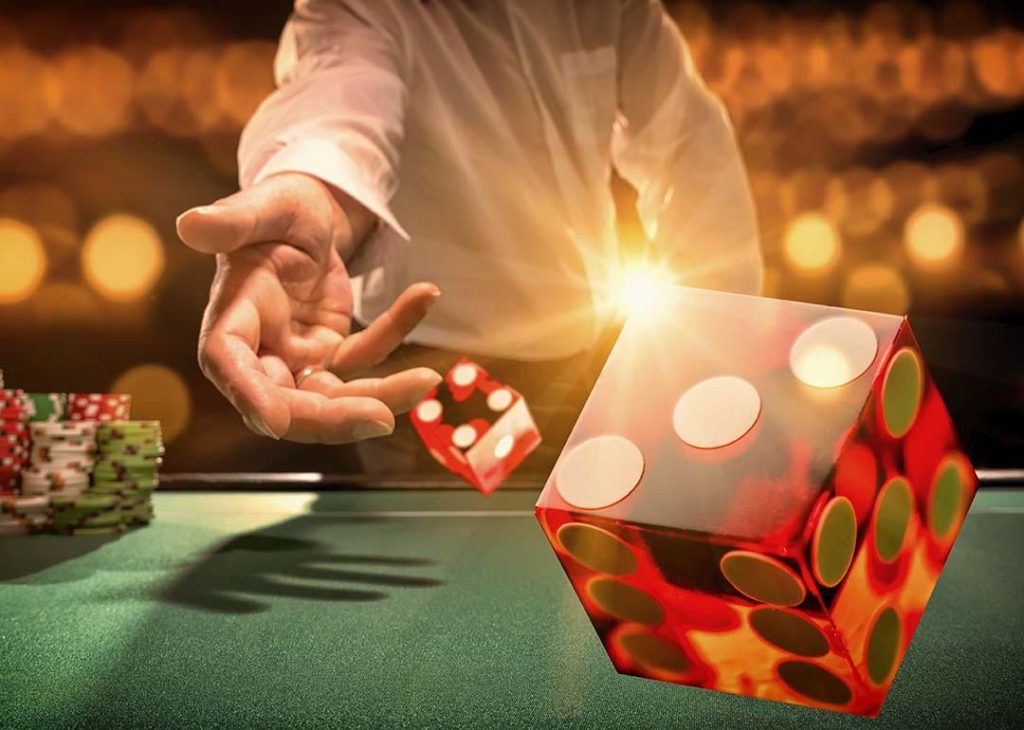
This is arguably the most cinematic superstition on the list. Pop culture, specifically the film Guys and Dolls, popularized the image of a gambler asking a beautiful woman to blow on the dice before a roll at the craps table.
While the origins are murky—some suggest it started as a way to clean dust off the dice to ensure a fair roll, while others insist it was merely a flirting tactic—it has become a staple of casino etiquette.
-
Welcome Bonus200% UP TO €1,000 + 10% DAILY CASHBACKMassive game selection from top providers like Evolution, NetEnt & Pragmatic Play Daily 10% cashback with no wagering Big welcome bonus Flexible payment options Fair maximum withdrawal limits 24/7 live chatDynabet CasinoJoin Now
-
Welcome Bonus57,000 $/€ + 200 FS * Terms and conditions apply to all offers. Click on “Claim now” to get further details about the respective bonus.+12,000 games Strong and varied bonus Sleek visual design To Claim: Click Join NowGoldex CasinoJoin Now
-
Welcome Bonus200% UP TO €1,000 + 10% DAILY CASHBACK10% daily cashback Big-name tournaments with real cash prizes Clean, responsive mobile and desktop experience Easy sign-up and broad payment supportHappyslots CasinoJoin Now


Colors and Charms: Attracting Prosperity
Across different cultures, physical objects are often imbued with metaphysical power.
The Power of Red
If you visit a casino in Macau, you might notice an abundance of red decor. This isn’t a design accident. In Chinese culture, red is the ultimate color of prosperity, joy, and good fortune.
This belief is so deeply roughly ingrained that many players will not hit the casino floor unless they are wearing something red. This could be a red dress or a red tie, but most commonly, it is red underwear. It is a secret lucky charm that stays close to the skin, theoretically soaking the player in positive energy.
The New Orleans Mojo Bag
Traveling to the American South, specifically Louisiana, we find the influence of voodoo on gambling. The “mojo bag” is a superstition dating back to the 19th century.
A traditional mojo bag is a small red flannel sack filled with specific herbs, roots, and tokens intended to draw wealth. Gamblers in New Orleans would carry these in their pockets, believing that the specific combination of items would render them invincible at the card table.
Hiding the Lottery Ticket
In Malta, older generations hold a belief related to the “evil eye.” They maintain that jealousy can physically manifest as bad luck. Therefore, if you buy a lottery ticket, you must keep it hidden. If someone who wishes you ill sees the ticket or knows you are playing, their negative energy could “curse” the numbers, turning a potential win into a loss.
The Numbers Game
Mathematics is the foundation of gambling, but numerology is the foundation of superstition.
The Divinity of Seven
The number seven is the darling of the gambling world. Its status as a lucky number spans across religions and cultures. In the Bible, the world was created in six days, with the seventh being a day of rest and completion. Mathematically, it is a prime number that cannot be divided, representing strength and indivisibility. This is why you will see “777” as the jackpot symbol on classic slot machines almost everywhere.
The Paradox of Thirteen
In Western culture, thirteen is the ultimate pariah. Stemming from the biblical story of Judas being the 13th guest at the Last Supper, the number is associated with betrayal and misfortune. It is so feared that many hotels skip the 13th floor entirely. In roulette, betting on 13 is often seen as courting disaster.
However, context is everything. In many Asian cultures, including Thailand and parts of China, 13 can be considered lucky or at least neutral. If you are gambling in the East, don’t be surprised to see people embracing the number Westerners fear.
The Japanese Fear of Four
While the West fears thirteen, Japan avoids the number four. This is a linguistic superstition: the Japanese word for “four” sounds nearly identical to the word for “death.” Consequently, you will rarely see the number four emphasized in Japanese pachinko parlors or casinos, as it is seen as an omen of bad luck.
The Australian “Seven” Taboo
Here is where things get confusing. While seven is generally lucky, Australian craps players have a strict rule: never say the word “seven” out loud at the table. In the game of craps, rolling a seven at the wrong time ends the round and causes everyone to lose. Aussies take this so seriously that uttering the number is considered a major breach of etiquette that summons bad luck for the whole table.
Weird and Wonderful Rituals
Some superstitions are so specific they defy categorization.
Feeding the Baby Ghost
This is perhaps the most unique entry on the list. In certain Chinese gambling circles, there is a belief that a “baby ghost” resides behind the blackjack table. To ensure this spirit doesn’t cause mischief or steal your cards, you must “feed” it.
Players who subscribe to this belief will sometimes place a small amount of sugar or a sweet treat behind them before the game begins. A fed ghost is a happy ghost, and a happy ghost might just let you win.
Rubbing a Pregnant Belly
In the Philippines, expectant mothers are viewed as vessels of good fortune. A common superstition involves rubbing a pregnant woman’s belly before placing a bet. The idea is that the purity and life force of the pregnancy will drive away bad spirits and bless the gambler with a winning streak.
The Itchy Palm Prophecy
If your hands start itching while you are in a casino, pay attention to which hand it is. In Bulgaria and other parts of Eastern Europe, an itchy right palm is a warning sign—it means you are about to give money away (i.e., lose). However, if your left palm itches, it is an omen that money is coming your way.
-
Welcome Bonus 15,000 €/$ + 200 FS * Terms and conditions apply to all offers. Click on “Claim now” to get further details about the respective bonus.Join Now
-
Welcome Bonus 250% up to €3000 + 200 FS * Terms and conditions apply to all offers. Click on “Claim now” to get further details about the respective bonus.Join Now
-
Welcome Bonus 200% match up to €1,000 Welcome BonusJoin Now


Bad Omens to Avoid
Just as there are things you should do, there is a laundry list of things you absolutely should not do.
The Front Door Curse
Some old-school gamblers refuse to enter a casino through the main entrance. The logic is somewhat metaphysical: people who have just lost all their money leave through the front door. By walking in through that same door, you are walking through their “cloud” of bad luck and failure. To avoid contamination, superstitious players will slip in through a side entrance.
The “Frog” Bill
If you are playing in the United States and cash out your chips, do not be surprised if a player rejects a $50 bill. This superstition has grim roots in mob history. Legend has it that when the mafia “whacked” someone, they would stuff $50 bills into the victim’s jacket pockets before burying them.
Because of this association with death, $50 bills are viewed as incredibly unlucky in American casinos. Dealers are often instructed to pay out in $20s or $100s to avoid offending players.
Lending Money
This is one superstition that likely stems from cold, hard reality. It is considered bad luck to lend money to another player at the table.
The superstitious reasoning is that giving away your funds signals to the universe that you don’t value your money, causing your own luck to dry up. The practical reasoning, of course, is that the likelihood of a gambler paying you back immediately is statistically low. In this case, superstition and financial responsibility align perfectly.
Whistling at the Table
Finally, if you are winning, try not to whistle. This originates from sailor folklore, where whistling on a ship was thought to summon strong winds and storms. In the casino, whistling is believed to summon a “storm” of bad luck—not to mention that it is generally considered annoying by other players trying to concentrate.
Testing Your Luck
Whether you believe feeding sugar to ghosts will help your blackjack game or if you simply think it’s all random chance, these rituals are part of the rich tapestry of gambling culture. They remind us that even in a game of probabilities, we all crave a little bit of magic.
The next time you find yourself at a table, take a look around. You might just spot someone crossing their fingers, wearing a red scarf, or entering through the side door, hoping to catch a break. Just remember: the best luck of all comes from playing responsibly and knowing when to walk away.