

In the world of Texas Hold’em, few moves scream “beginner” quite like the limp. It’s the safe, comfortable choice—sliding a single big blind into the pot to see a cheap flop. It feels low-risk. It feels easy. But for serious players, the limp is often viewed as a flashing neon sign that reads: “Attack me.”
Is limping always a disaster for your win rate? Or are there rare moments where this passive play actually makes sense? Let’s dissect the mechanics of the limp, why it usually bleeds chips, and how to fix your preflop strategy.

What Does “Limping” Actually Mean?
In its simplest form, limping is entering a pot preflop by merely calling the big blind rather than raising. It is the most passive way to get involved in a hand.
To understand the nuance, you need to distinguish between the three main types of limps you’ll see at the table:
- Open Limp: You are the first person to voluntarily enter the pot, and you choose to call the big blind. This is the “classic” limp and is generally considered the weakest play in poker.
- Overlimp: One or more players have already limped before you, and you decide to come along for the ride by calling as well.
- Limp-Call: You limp, a player behind you raises, and you call that raise. This is widely regarded as one of the most expensive leaks in a poker player’s game.

Top Casino
CryptoCasino.com
Sign up bonus
200% up to 10,000 USDT + 50 FS + 5 USDT Sports Bet
* Terms and conditions apply to all offers. Click on “Claim now” to get further details about the respective bonus.
Why Players Do It (And Why It Costs Them)
If limping is so bad, why is it so common? Usually, it comes down to fear or curiosity.
Players often limp with “speculative” hands—small pocket pairs (22–66) or suited connectors (6♥7♥)—because they want to see if they hit a miracle flop without investing too much. In other cases, they are just following the herd; if the table is loose and passive, they join in. Occasionally, a tricky player might “limp-reraise” with Aces to set a trap, though this is often transparent and hard to balance.
However, the mechanics of a limped pot usually work against you for several reasons.
1. You Surrender the Initiative
When you raise, you are telling a story of strength. This gives you the “betting lead,” allowing you to win the pot postflop with a continuation bet (c-bet) even if you miss. When you limp, you signal that you don’t have a strong hand. You have no momentum, making it harder to bluff or represent strength later.
2. You Invite Aggression
Good players love to “isolate” limpers. When they see a limp, they smell weakness. They will often raise larger than normal to force you into a heads-up pot where they have the positional advantage. This puts you in a terrible spot: fold and lose your blind, or call and play a bloated pot out of position.
3. You Create “Bingo” Poker
Limping encourages other players to come along cheaply. Instead of playing heads-up, you end up in a 4-way or 5-way pot. While this sounds fun, it significantly decreases your equity. Aces might be an 85% favorite against one player, but in a 5-way family pot, they are much more likely to get cracked by a random two-pair.
4. You Win Small Pots
Poker isn’t just about winning hands; it’s about winning money. If you rarely raise preflop, you rarely build the pot when you actually have the goods. You end up winning small pots when you’re ahead and losing medium-sized pots when you get outplayed.
The Exception: When Can You Limp?
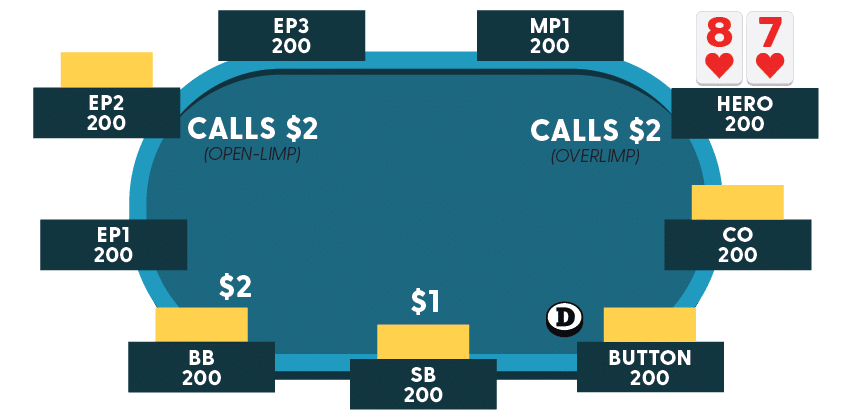
Poker is rarely black and white. While open-limping is almost universally condemned, overlimping can have a place in a winning strategy under specific conditions.
You might consider overlimping if:
- The table is passive: There are no aggressive players behind you likely to raise and squeeze you out.
- You are deep-stacked: You have plenty of chips behind, meaning the “implied odds” (the money you can win if you hit your hand) are high.
- You have a multiway hand: You are holding low pocket pairs or suited connectors that play well in big crowds.
In tournament poker, where chip stacks are shallower, some high-level pros also implement limping strategies to protect their stack or manipulate the pot size, but this requires a deep understanding of ICM (Independent Chip Model) and is not recommended for the average player.

Featured Casino
Joo Casino
Sign up bonus
19,000 €/$ + 300 FS
* Terms and conditions apply to all offers. Click on “Claim now” to get further details about the respective bonus.
The Fix: Adopt a “Raise or Fold” Strategy
If you want to instantly improve your win rate and simplify your decision-making, adopt a Raise or Fold default strategy.
When you are the first to enter a pot, force yourself to make a choice: is this hand good enough to raise?
- Yes? Raise and take the initiative.
- No? Fold and wait for a better spot.
This approach defines your range, generates “fold equity” (winning the pot immediately because everyone else folds), and prevents you from bleeding chips with mediocre hands.
Furthermore, you should look to punish other limpers. If you see someone open-limp, don’t just call behind them. punish their passivity with an isolation raise. Make them pay to see the flop, and take control of the table.
The Bottom Line
Is limping a strategy? Technically, yes. Is it a good strategy? Rarely.
While there are niche scenarios where overlimping is acceptable, the vast majority of open-limps are missteps that cost you money in the long run. By giving up control and inviting multiway action, you turn a game of skill into a game of chance.
Aggression is the currency of poker. Stop asking for permission to see a flop—pay the price, take the lead, and play to win.